Winter Haven, FL · Polk County · ZIPs 33880, 33881, 33884
Backflow Testing in Winter Haven, FL
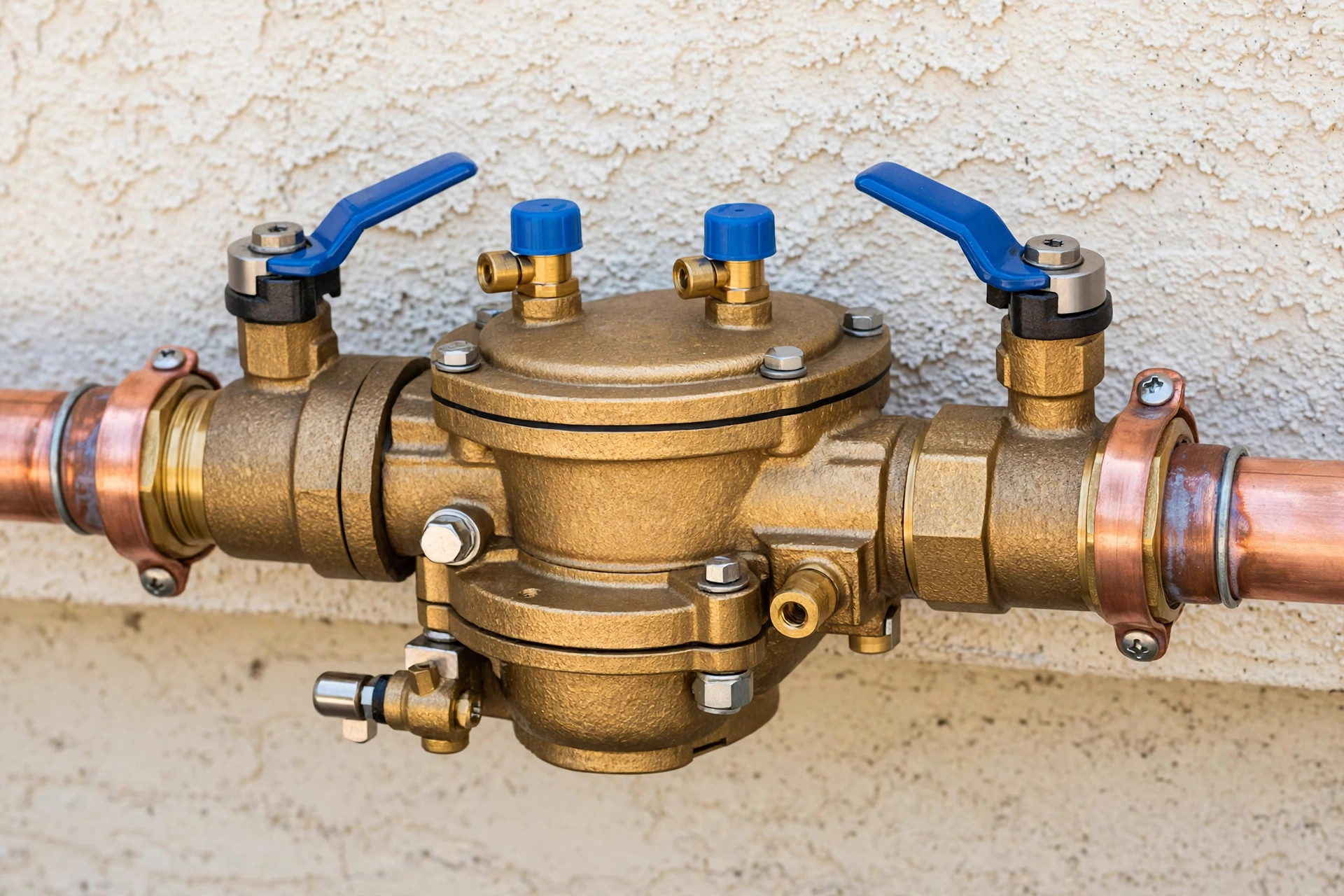
Backflow testing in Winter Haven, Florida: a certified test of your backflow preventer, a written report with the readings, and the paperwork your water provider needs. Residential irrigation devices are tested every 2 years and commercial assemblies every year under Florida DEP Rule 62-555.360, and the only accredited tester certification in Florida is UF TREEO.
Call now for a free estimate
Free estimate on the call — no obligation. No forms, just call.
Serving Winter Haven, FL 33880, 33881 and 33884, and nearby Lakeland, Auburndale and Bartow.
What our backflow testing includes
Visual inspection first
The device, the pipes around it and the shut-off valves are checked for leaks, damage and corrosion before any gauge is connected.
Gauge testing of every valve
Each check valve is tested with gauges, and on an RPZ the relief valve is tested too. Every reading is written down, not estimated.
Device identification
The make, model and type of the device are recorded, so the report and the paperwork match the assembly that was actually tested.
Written test report
You get a report showing the readings, the pass result and the test date, so you know exactly when the next test is due.
Paperwork for your water provider
The documentation your water provider needs is prepared as part of the visit. The test is only finished when the paperwork is ready.
Repair and retest in one job
If a device fails, it is repaired or adjusted and tested again in the same job, so the final paperwork shows a pass.
Signs your backflow preventer needs attention
- Water pressure has dropped. A valve that is sticking or clogged with debris can cut the flow to the house or the irrigation system.
- Water looks or tastes different. Discoloured water or an unusual taste or smell after the irrigation runs is a reason to test, not to wait.
- Water pooling near the device. A relief valve that keeps dripping, or water around the assembly, means a valve is not sealing.
- You got a notice from your water provider. A testing reminder or a missed-deadline letter means the test is due now.
- The irrigation system changed. New zones, a new pump or a rebuilt system can change the load on the preventer, so the device should be tested.
- The last test was more than two years ago. For a residential irrigation device, that is past the Florida schedule. The residential testing page explains the two-year rule.
How we handle a backflow test in Winter Haven
- Call and book. Tell us the property, the device if you know it, and the date on your water provider's notice. You get a free estimate on the call.
- Inspect. The tester looks at the device, the shut-offs and the pipes first, so nothing is forced open on a damaged assembly.
- Connect the gauges. Each valve is tested in turn and the readings are recorded against the standard for that device type.
- Decide pass or fail. The readings decide. A pass is reported as a pass; a fail is explained in plain words, with what it will take to fix.
- Report and paperwork. The written report and the documentation for your water provider are prepared before the tester leaves.
- Repair and retest if needed. A failed device is repaired or adjusted and tested again, so the final paperwork shows a pass.
Testing versus skipping the test
| Choice | What it means |
|---|---|
| Tested on schedule | The device is proven working, the report shows the readings, and the paperwork is current with your water provider. |
| Test skipped | A failing valve goes unnoticed, the paperwork falls behind the schedule in Florida DEP Rule 62-555.360, and a problem is found only when water quality or pressure shows it. |
| Tested, device failed, repaired | The failure is found on a gauge, fixed, and retested, so the final paperwork shows a pass. That is the whole point of testing. |
Testing does not make a device last longer. It proves whether the device is still protecting the water, and it catches a failure while it is still a repair.
What affects the price of a backflow test
A straightforward residential test in Florida is typically $100–200. That is a Florida market estimate, not a quote, and the exact price is confirmed on the call before the visit. What moves it:
- How many devices. One device is one test. A property with two or three assemblies costs more because each one is tested and reported separately.
- Device type. An RPZ takes more gauge work than a PVB, because more valves are tested.
- Access. A device buried in shrubs, behind a locked gate or in a tight pit takes longer to reach and set up.
- Fail and retest. If a device fails, the repair and the retest are part of the same job, and the repair is priced with you before it starts.
- Residential or commercial. Commercial properties usually have more devices and an annual schedule. See the commercial testing page and the full breakdown on our backflow testing cost page.
Backflow testing and Winter Haven conditions
Winter Haven is a Polk County city, and most of its homes run irrigation systems, so the two-year residential testing rule touches a large share of properties here. The same rule covers the nearby towns we serve: Lakeland, Auburndale and Bartow. Older properties often have older valves, which fail more often and are worth testing on schedule. Newer subdivisions usually have a single PVB on the irrigation line, which is a quick test when access is clear. In every case the device type and the property decide the work, not the neighbourhood.
Why Winter Haven chooses us for backflow testing
- Free estimate before the visit. You know the price before anyone comes out.
- Readings, not guesses. Every valve is gauge-tested and every reading is written into the report.
- Paperwork included. The report and the documentation for your water provider are part of the job, not an extra.
- Straight answers on a fail. If the device fails, you hear what failed, what the repair is, and what it costs, before any work starts.
Backflow testing FAQs
What does the tester check during a backflow test?
Each valve on the device is checked with gauges: the check valves must hold pressure from one side only, and on an RPZ the relief valve must open at the right point. The tester reads each value, compares it with the standard for that device type, and writes it into the report.
Which backflow devices do you test?
Reduced pressure zone assemblies (RPZ), double check valve assemblies (DCVA) and pressure vacuum breakers (PVB). If you are not sure which type you have, a photo of the device tag usually tells us. The device types are explained on our backflow prevention page.
What paperwork do I get after the test?
A written report with the readings and the pass result, and the documentation your water provider needs. Keep the report: it is the record of the test date, which decides when the next test is due.
What happens if my backflow preventer fails the test?
The device is repaired or adjusted, and then retested in the same job, so the final paperwork shows a pass. A failed first test is common on older devices and does not automatically mean a new device is needed.
How do I prepare for a backflow test?
Make sure the device and its shut-off valves can be reached, and have your water provider's notice handy if you got one. A photo of the device, sent before the visit, helps us bring the right parts. Call (928) 693-1910 for a free estimate first.
Ready to schedule your backflow test?
Call for a free estimate. Tell us the property and the date on your water provider's notice, and we will book the test.
Call now for a free estimate
Free estimate on the call — no obligation. No forms, just call.
Serving Winter Haven, FL 33880, 33881 and 33884, and nearby Lakeland, Auburndale and Bartow.